

Braised Chicken and Leeks (AIP, Paleo, Whole30)
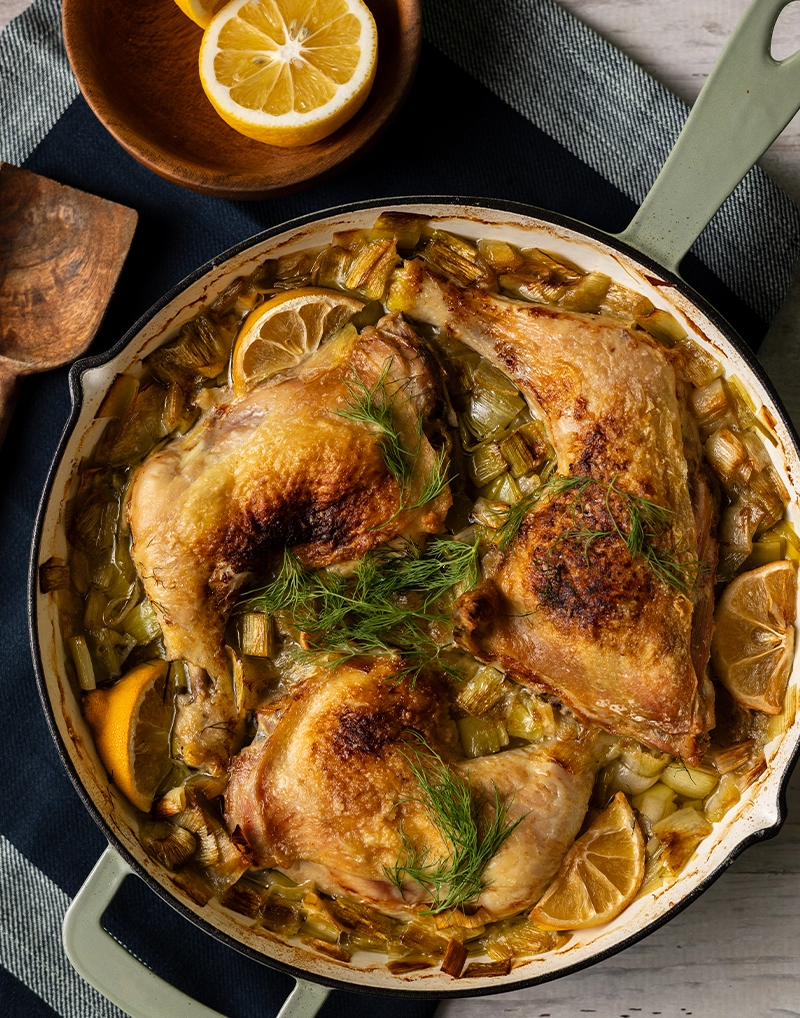
Even as spring starts to edge in, I’m not quite ready to let go of a slow, unctuous Sunday braise. This one-pot Braised Chicken and Leeks meets that moment. Leeks are at their best now, grassy and tender. They’re paired with chicken quarters browned in a generous spoonful of ghee (or duck fat, for a dairy-free alternative). Add in lemon quarters (Meyer lemons, if you can find them), for a pop of brightness that keeps the whole dish in balance. After a short time in the oven, the chicken turns silky and tender, the leeks jammy and sweet. Top with fresh dill and a squeeze of lemon; it doesn’t need anything more.
How this Chicken and Leeks recipe fits AIP, Paleo and Whole30
This recipe is fully compatible with AIP Modified and Whole30, even when made with ghee. While ghee is technically dairy, the milk solids have been removed, and many find it less likely to trigger inflammation or discomfort, and it’s on the allowed list for both protocols. For Paleo or AIP Core, duck fat is the ideal swap. It brings a similar richness and, in this case, complements the leeks and chicken especially well. It’s something you can use as a substitute or an intentional flavor choice.
Free subscriber gift
Exclusive recipes + a simple way to meal plan
Get five recipes I’ve never published on the site — from cozy winter squash soup to shrimp al pastor bowls — plus my easy one-page system for planning lunches + dinners all week.
Plus, I’ll send new recipes and the occasional update your way. Unsubscribe anytime.
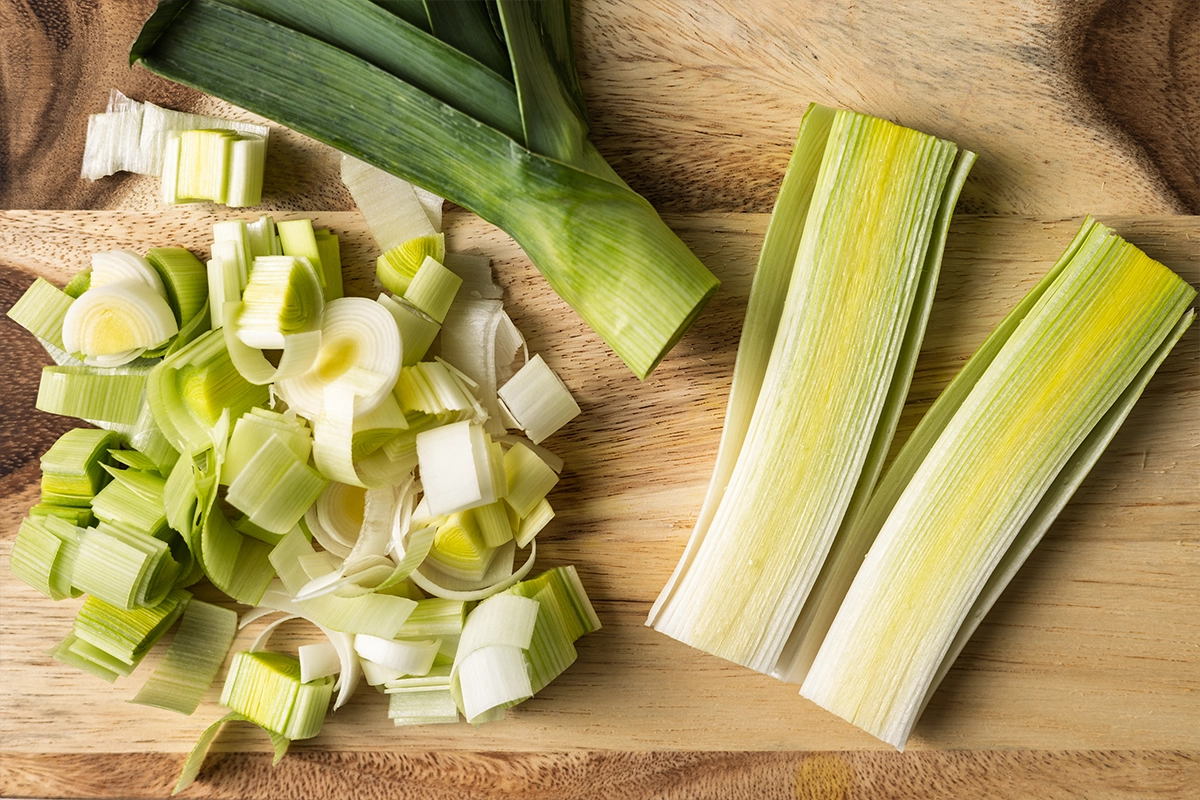
Leeks are an aromatic landing somewhere between garlic and shallot. Like both, they soften and mellow when cooked. They can feel a little fancy, but I think most hesitation comes from having had a gritty leek at some point and not being quite sure how to avoid it.
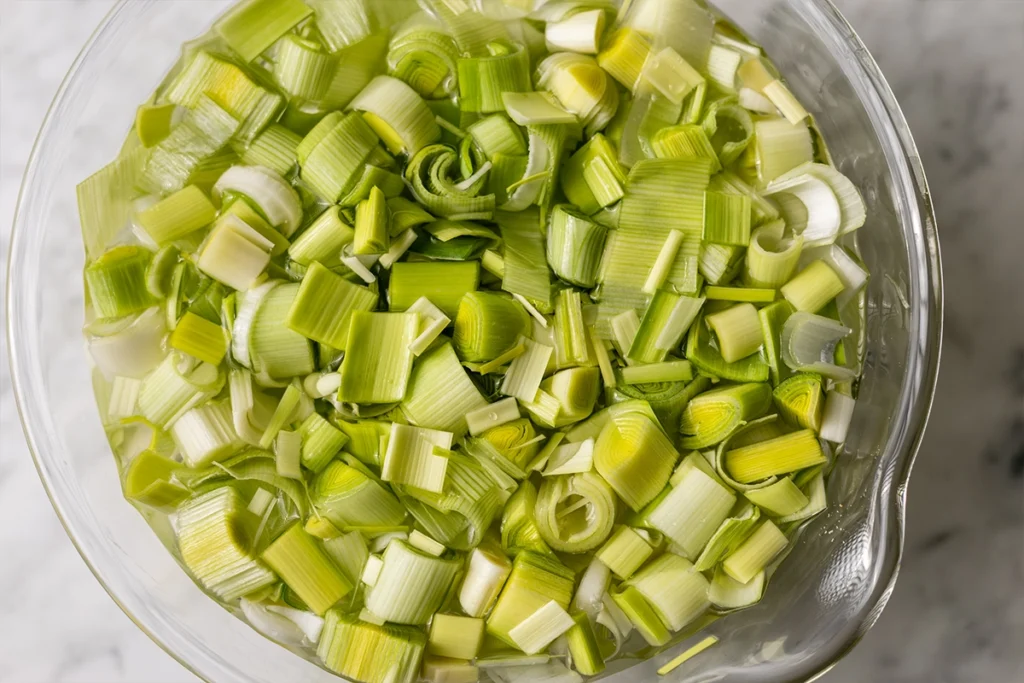
Leeks grow in very sandy soil, and the only real catch is that getting them properly clean can feel a little tedious. Here’s what works for me: after slicing, give them a thorough soak in a deep bowl of water. Swish them around then let them sit, allowing all of the grit to settle. Then, lift the leeks out using your fingers or a slotted spoon, so as to not disturb the sand and silt at the bottom. Drain and repeat until the water runs clear. It takes a few rounds, but makes all the difference.
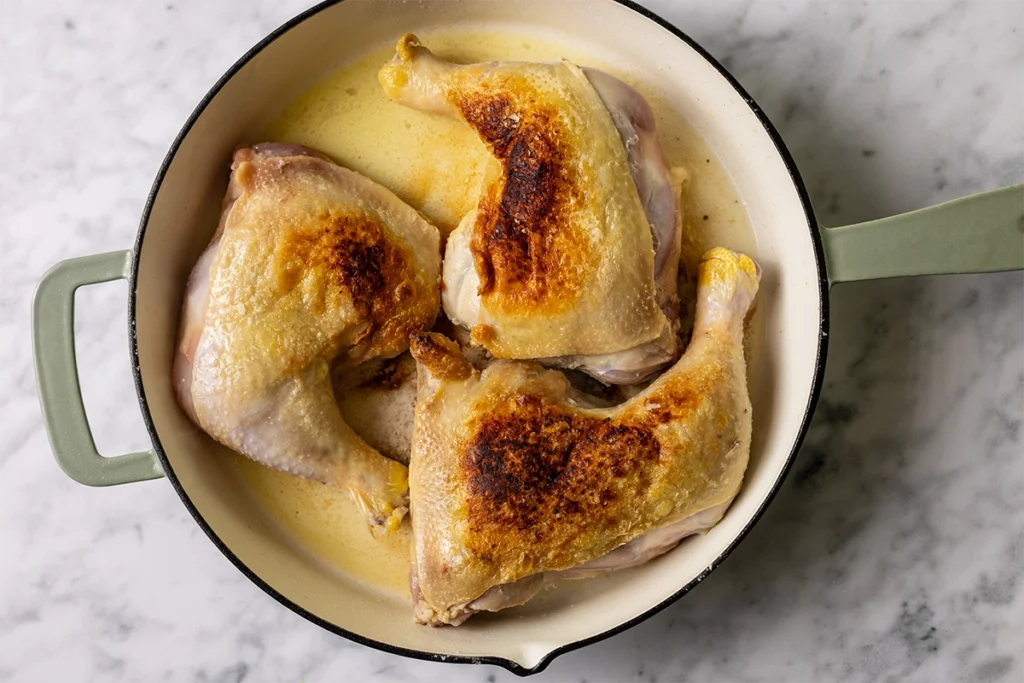
Brown the chicken quarters in a large stock pot. Use ghee or duck fat, it’s up to you. I do prefer a solid, flavorful cooking fat for this recipe, because it does add depth to the braise and body to the sauce. That said, they both have their own flavor profiles. Ghee tastes like butter, since it is technically butter, just with the milk solids removed. If you’re dairy-free, use duck fat instead. Duck fat will amp up the flavor of the chicken and add more long-cooked flavor to the stock, like a broth that’s been simmering for awhile.
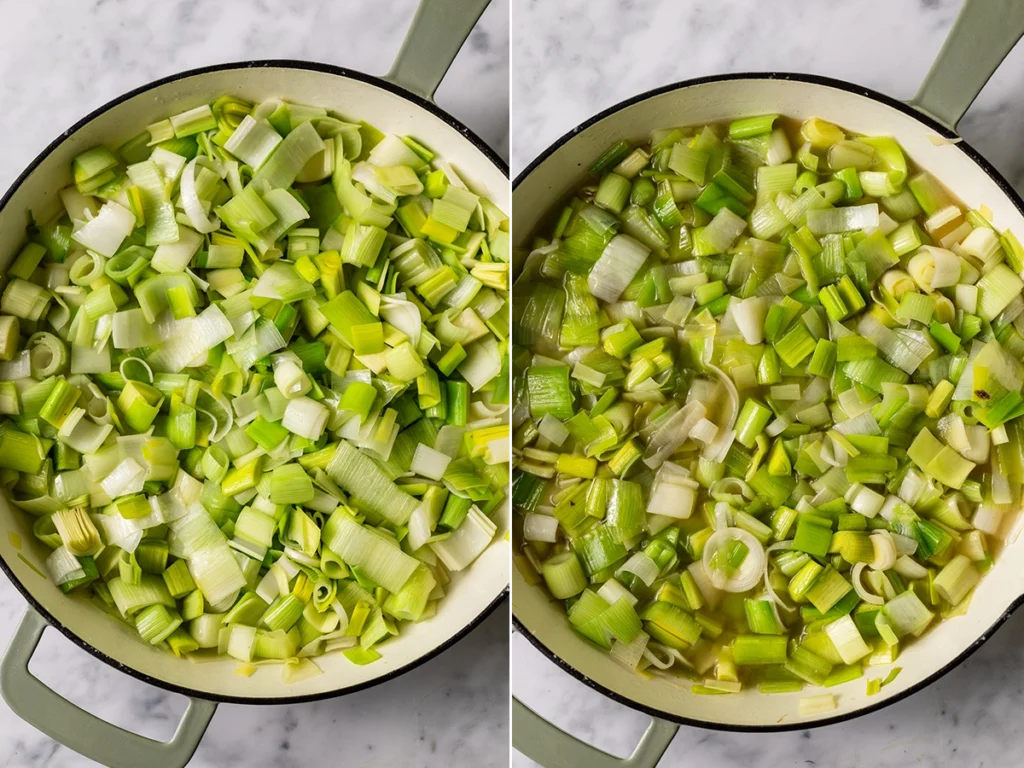
Remove the chicken and place it skin-side up on a plate nearby. Then, add the leeks, and a teaspoon of salt. Let them coat in the fat and sweat for a few minutes, then add in the chicken stock and lemon juice, plus a small squeeze of honey.
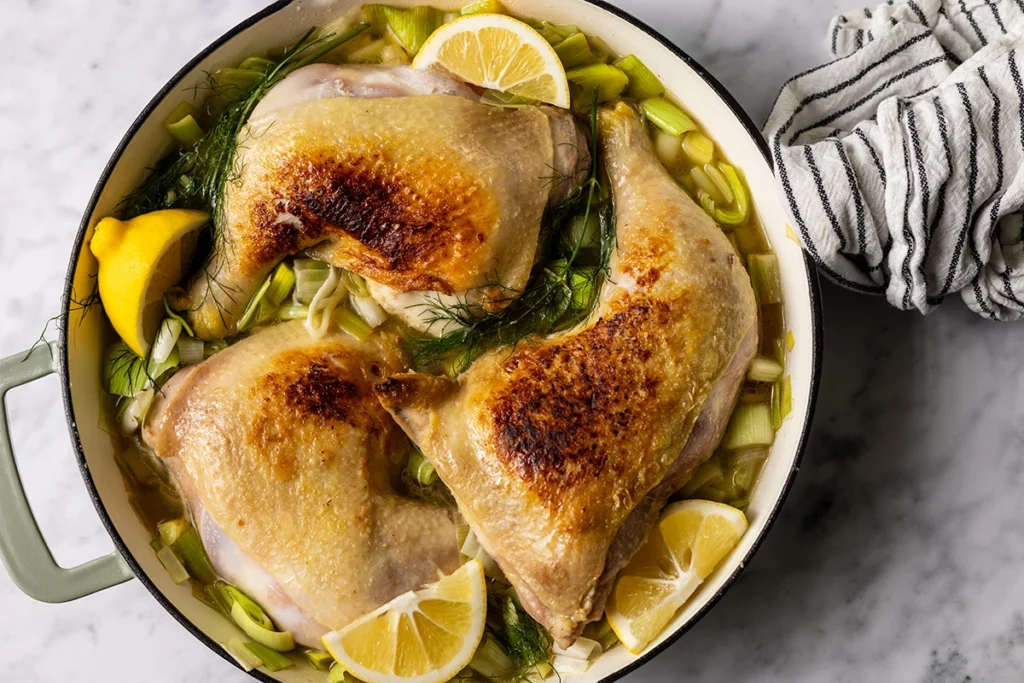
Then, nestle the chicken into the leeks, add a sprig or two of dill, and tuck in all of the quartered lemons and lemon rinds. Place uncovered in a 300° oven for around 2 hours. Check the internal temperature of the chicken after an hour, and then again at 90 minutes. Dark meat chicken needs to reach a little higher temperature than chicken breast. Let it cook to an internal temperature around 185° before you pull it from the oven. And if the pan begins looking dry, add a splash or two of chicken stock as needed throughout cooking.
Cook’s Note
I like to make this recipe with Meyer lemons. They’re a hybrid of lemon and mandarin orange, so they’re more floral, sweeter and have very thin skins. They’re in season for a short window between December and early spring, and they’re still considered a specialty item, not always readily available in all supermarkets. If you can find them, use them. If not, opt for regular lemons, instead.
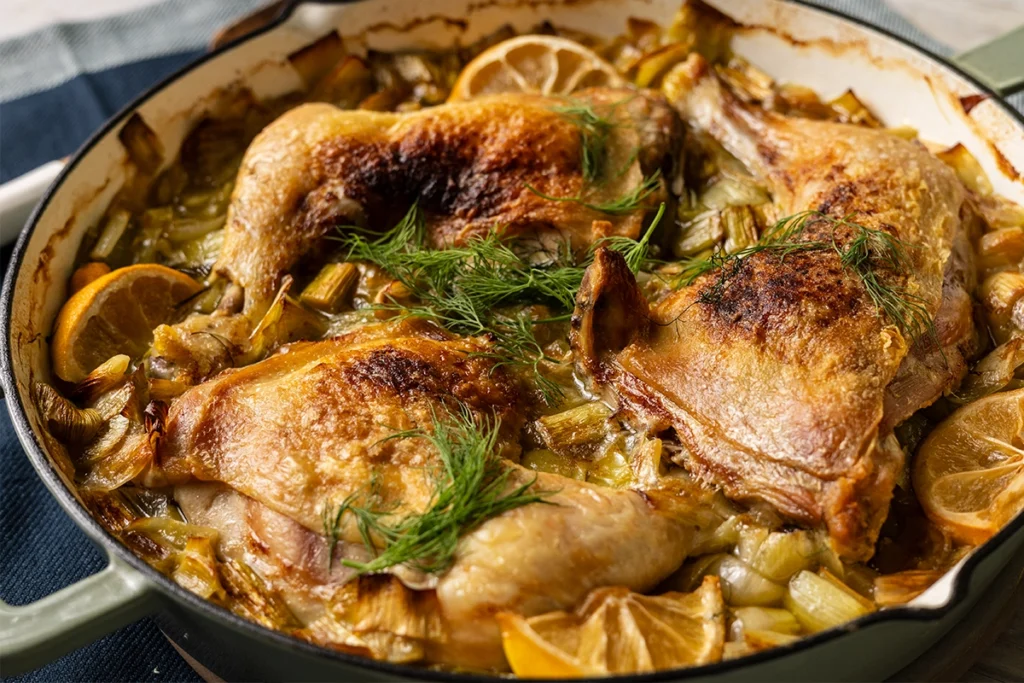
It’s hard to resist, but let the chicken rest for a bit, then bring it to the table and serve it right from the pot, finished with fresh dill and a squeeze of the roasted lemons. The leeks soften and the braising liquid turns into a light sauce. It’s everything you want in a one-pot chicken dinner to welcome spring.
You might also like
If you love this Braised Chicken and Leeks, try one of these one-pot chicken recipes next.
Marry Me Chicken without Tomatoes
Sheet Pan Chicken Tagine
Balsamic Chicken with Figs
Save this Recipe
Enter your email below and I’ll send it right to your inbox.
By saving this recipe, you will also receive regular email updates from Salt & Well.
Braised Chicken and Leeks FAQ
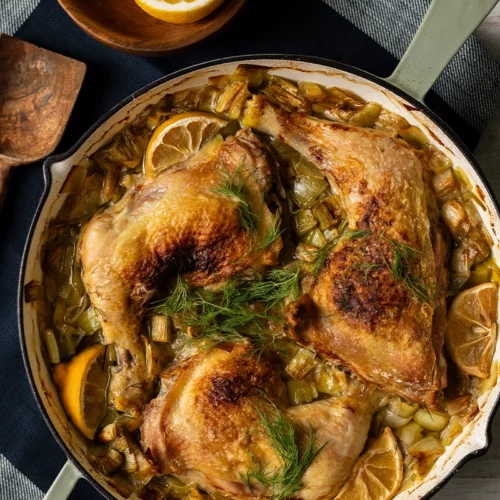
Braised Chicken and Leeks (AIP, Paleo, Whole30)
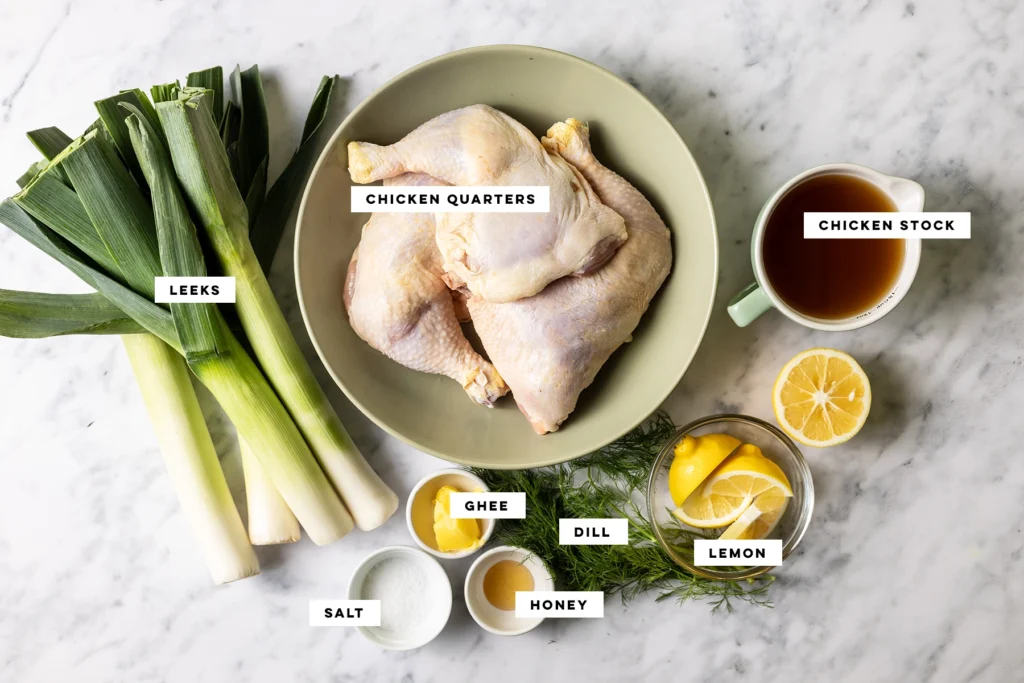
Ingredients
- 3-4 lb bone-in, skin-on chicken quarters (about 4 pieces)
- 1 tbsp Kosher salt, divided
- 1 tbsp ghee or duck fat
- 4 large leeks, bulbs and mid-greens cut into 1-inch rounds and washed well (about 6 cups)
- 2 Meyer lemons
- 1½ cups chicken stock
- 1 tsp honey
- 3-4 sprigs fresh dill
Instructions
- Heat the oven to 300°.
- Season the chicken with 2 teaspoons of salt.
- Juice one Meyer lemon, measuring around 2 tablespoons of juice. Quarter the remaining lemon along with the juiced half.
- In a wide, high-sided skillet, melt the ghee or duck fat over medium-high heat. Add the chicken, skin-side down, and cook until the skin is golden and crisp, 7 to 10 minutes. Transfer to a plate, skin-side up.
- Add the leeks to the pan with the remaining teaspoon of salt and sauté until the leeks are bright green, about 2 minutes. Add the lemon juice, chicken stock, and honey, scraping up any browned bits from the bottom of the pan.
- Nestle the chicken back into the pan, skin-side up. Tuck in the lemon quarters and a few sprigs of dill, reserving some dill for garnish.
- Transfer to the oven and braise, uncovered, for about 2 hours, until the chicken reaches 185° to 195°F and is fall-apart tender. Serve topped with the remaining dill.
Did you make this recipe?
I would love to hear from you! Leave a comment or a rating below.



Leeks are my favorite first sign of spring.