

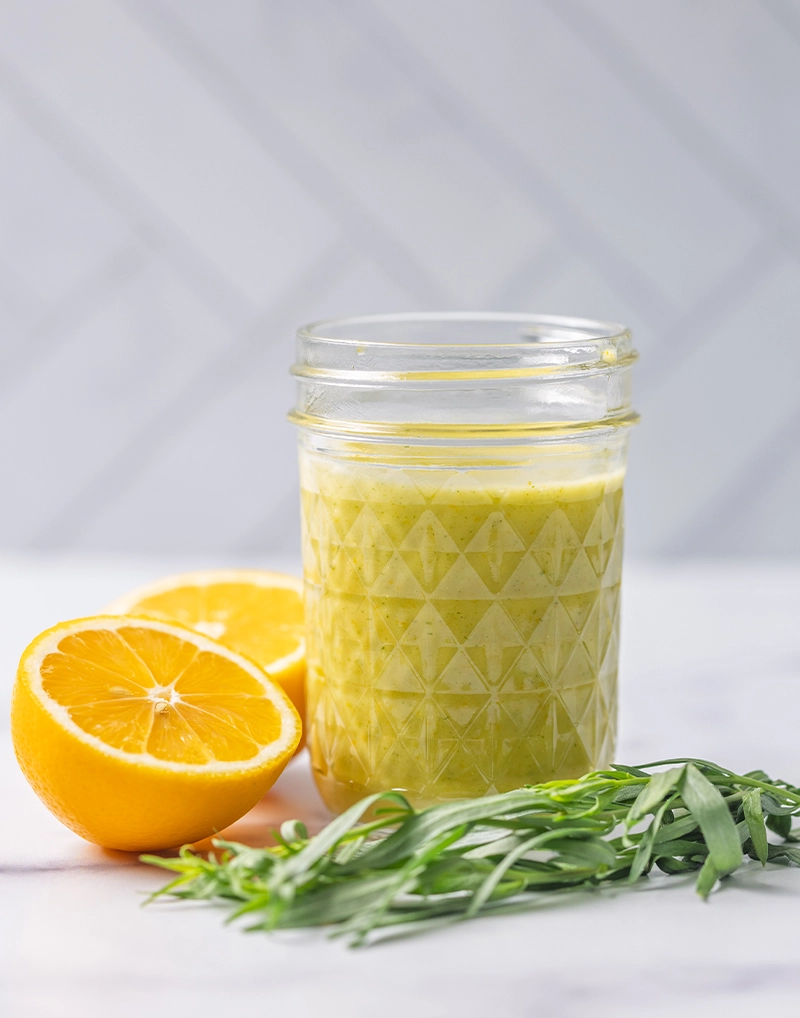
Meyer Lemon Vinaigrette (AIP Modified, Paleo)
This Meyer lemon vinaigrette is one of those simple recipes that ends up doing a lot of work in the kitchen. Meyer lemons pair beautifully with hardy herbs, and tarragon is my favorite here because its gentle anise notes play especially well with citrus and olive oil. It works as an everyday salad dressing, but it’s just as useful as a light sauce for roasted vegetables, chicken, and fish. Spoon it over a platter of roast chicken and winter greens like radicchio or kale, and suddenly everything feels more finished. If you’re avoiding eggs, it’s also a lovely stand-in for richer sauces like béarnaise or hollandaise.
How this vinaigrette fits AIP Modified and Paleo
This Meyer lemon vinaigrette fits easily into a Paleo approach. For AIP Modified, the main thing to pay attention to is the mustard, since many popular brands use nightshade-derived spices or non-compliant vinegar. In this recipe, the mustard acts as an emulsifier, helping the vinaigrette stay well combined, but it’s optional. If you leave it out altogether, the vinaigrette becomes suitable for AIP Core, the original Autoimmune Protocol. For Whole30 and Plant-Based Whole30, simply omit the touch of honey. The natural sweetness of Meyer lemons is usually enough to balance the acidity on its own.
Free Recipe Book
The Everyday Botanical: Tonics, Elixirs and Calming Blends
A quiet cup can change the shape of a day. Warm mugs, iced teas, and mocktail sparklers you can make at home to support calm, aid digestion, and bring you back to center, using familiar ingredients and a little kitchen practical magic.
When are Meyer Lemons in season?
Meyer lemons are in season for a short time each year, beginning in December and into early spring. They’re an orange and lemon hybrid with small, thin skins and less pucker than traditional lemons. If you can’t find them, you can combine the juices and zest of an orange and lemon to mimic the Meyer Lemon’s distinct sweet-tart flavor.
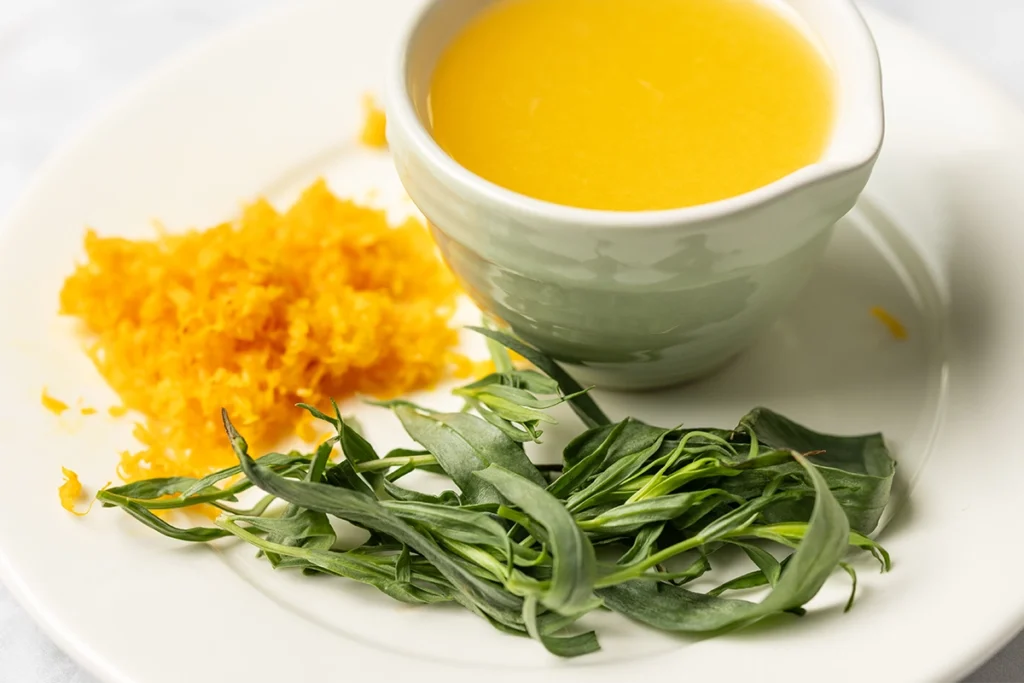
Zest then juice the Meyer lemons. You’ll need two, maybe three, lemons for a quarter cup of juice and two tablespoons of zest. Then, strip the tarragon leaves from the woody stem until you have about a tablespoon of leaves.
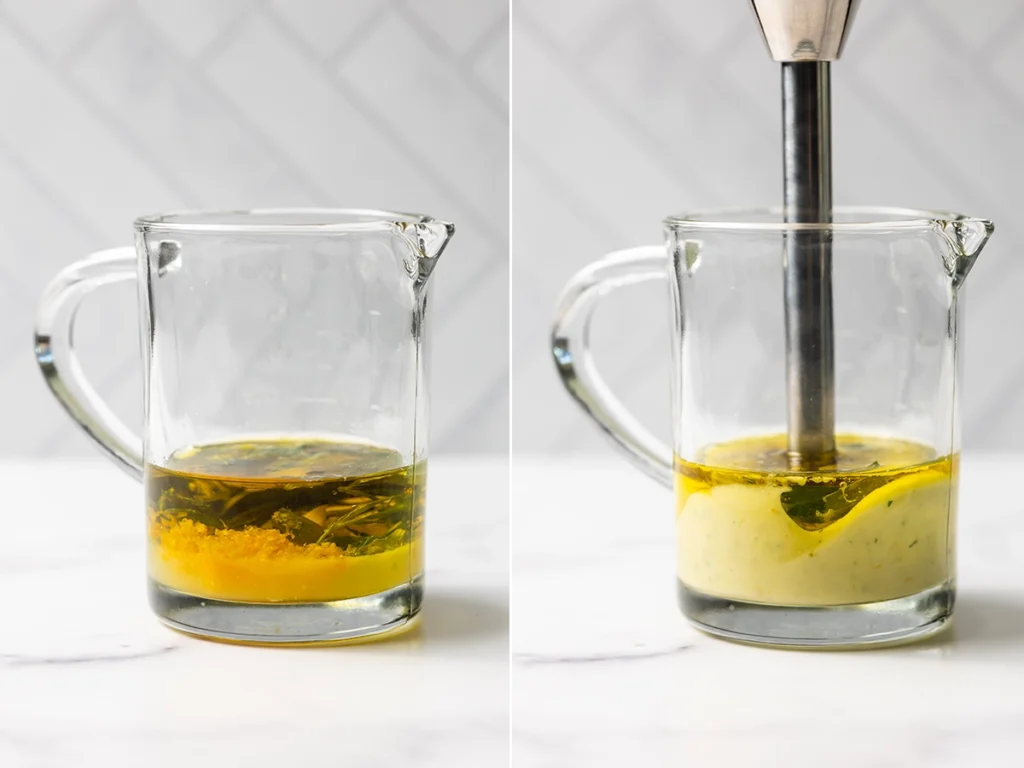
Add the olive oil, lemon zest and juice, mustard, tarragon leaves, honey, and salt to a high-powered blender, or use an immersion blender, and blend until smooth and emulsified. The finished vinaigrette should taste bright and citrusy, with the tarragon adding a subtle, fennel-like anise note in the background.
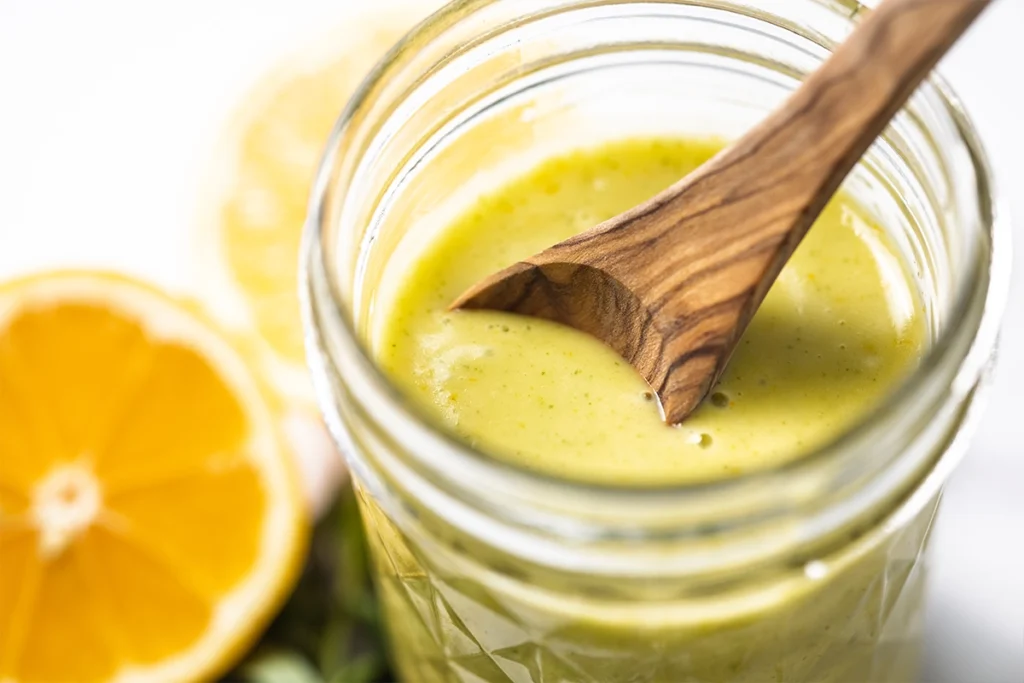
Give the vinaigrette a final taste and adjust the salt or lemon as needed. Transfer it to a jar and refrigerate, then use within five days. With a dressing like this Meyer lemon vinaigrette waiting in the fridge, even a quick piece of seared salmon or simply steamed vegetables like asparagus and broccoli can feel like a more considered. You’ll think you’re having a restaurant meal, except you pulled it together in minutes.
You might also like
If you love this Meyer Lemon Vinaigrette, try one of these salad dressings next.
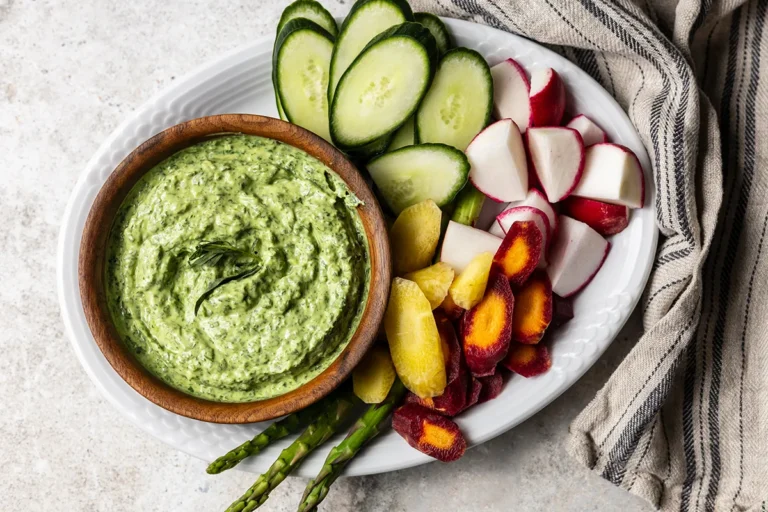
Dairy-Free Green Goddess Dressing
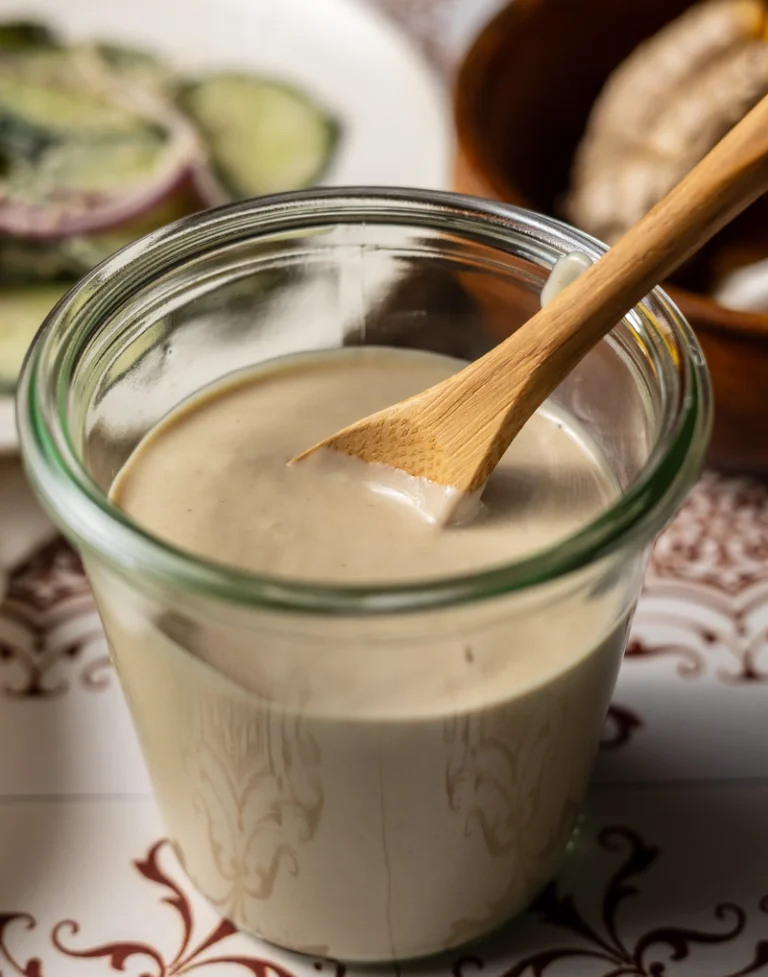
Tahini Dressing with Lemon and Ginger

A New Way to Listen
Find your inner compass
Even when you’re following a food framework carefully, questions still come up. Sometimes it’s as simple as, This food is allowed, but does it actually work for me?
Your body already knows. This free three-part series shows you a simple way to decode those answers into clear signals you can use when making everyday decisions, starting with food.
Meyer Lemon Vinaigrette FAQ
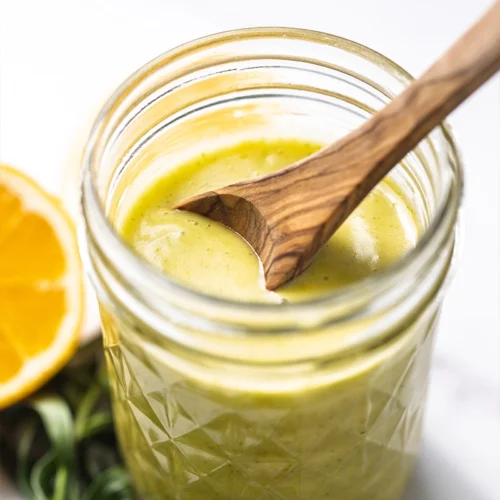
Meyer Lemon Vinaigrette (AIP Modified, Paleo)
Ingredients
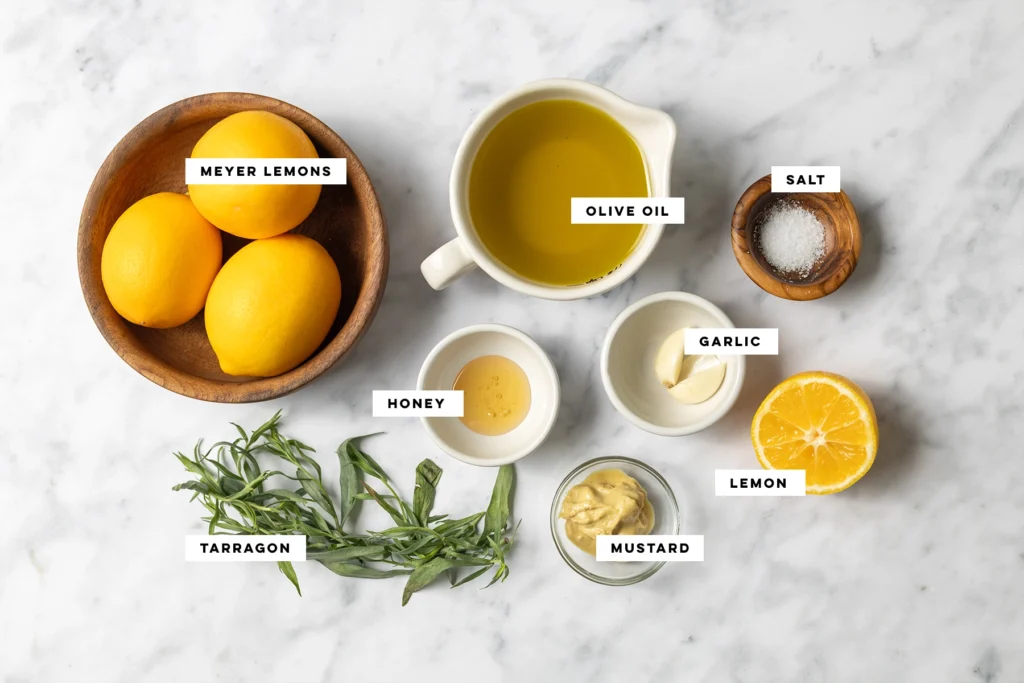
- ½ cup olive oil
- ½ tsp mustard
- 1 tsp honey
- 3 Meyer lemons
- 1 tbsp fresh tarragon leaves
- 1 clove garlic
- ¼ tsp Kosher salt
Instructions
- Zest the lemons and measure 1 tablespoon of zest. Then, squeeze the lemons and reserve 1/4 cup of juice.
- Add the olive oil, mustard, honey, lemon juice and zest, tarragon, garlic and salt to a blender. Or use an immersion blender.
- Blend until all of the ingredients are fully combined and the dressing is emulsified. Season to taste.
Notes
Did you make this recipe?
I would love to hear from you! Leave a comment or a rating below.
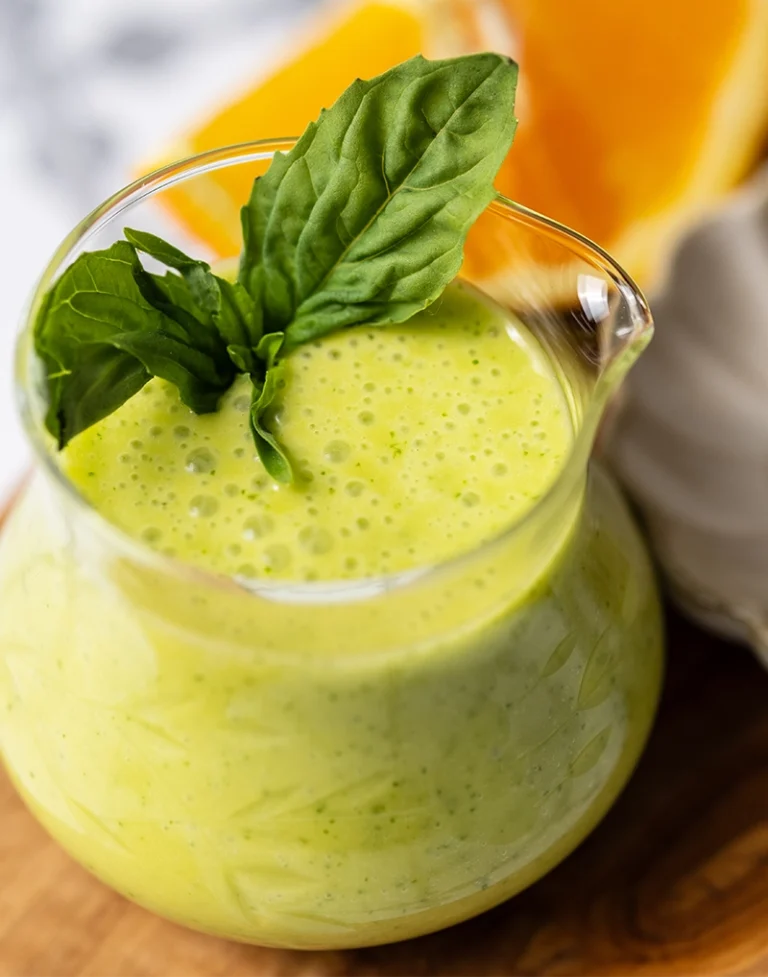
I love this dressing as an egg-free swap for bearnaise or hollandaise sauce, especially on asparagus.