

Baked Pumpkin Pudding (Gluten-Free, Dairy-Free, Egg-Free)
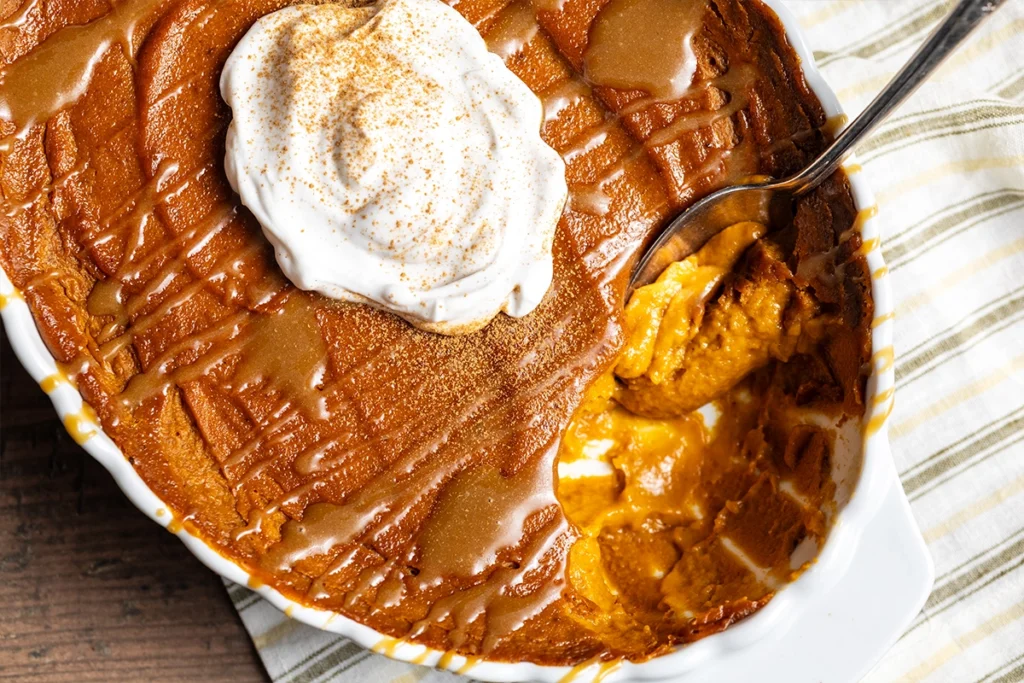
Thanksgiving isn’t complete without pumpkin pie, in my opinion. Can there be other comers to the party? Sure. Apple pie and pecan pie are welcome to play a supporting role, but pumpkin pie is the star, at least at my Thanksgiving table.
So when I shifted my eating to gluten-free, dairy-free and egg-free, Thanksgiving was woefully lacking my favorite dessert. And it’s not like pumpkin pie can’t be adapted. It certainly can. We can go crustless. We can even go egg-free, which is pretty remarkable for a dessert that’s technically an egg custard. But the dairy gave me pause. How can you replace evaporated milk for a dairy-free pumpkin pie?
Honestly, I was hesitant to turn to coconut milk. Even coconut heavy cream didn’t seem quite suited to the job, and I definitely wasn’t looking for a tropical coconut-pumpkin pie. Then I reached for a container of coconut yogurt: thick, creamy, and, depending on the brand, already made with a little tapioca or cassava for thickening — which, spoiler alert, is exactly the strategy I’m using here to replace the eggs.
And somewhere along the way, I realized this recipe didn’t need to pretend to be pie at all. It’s a dream as a baked pudding. You get pumpkin with all those familiar warm spices, a creamy, silky texture and not even a hint of tropical coconut flavor. And then I top it with a drizzle of my dairy-free salted caramel sauce. Just everything I love about classic pumpkin pie, dressed up a little differently for an inclusive Thanksgiving table.
How this recipe fits AIP, Paleo and Whole30
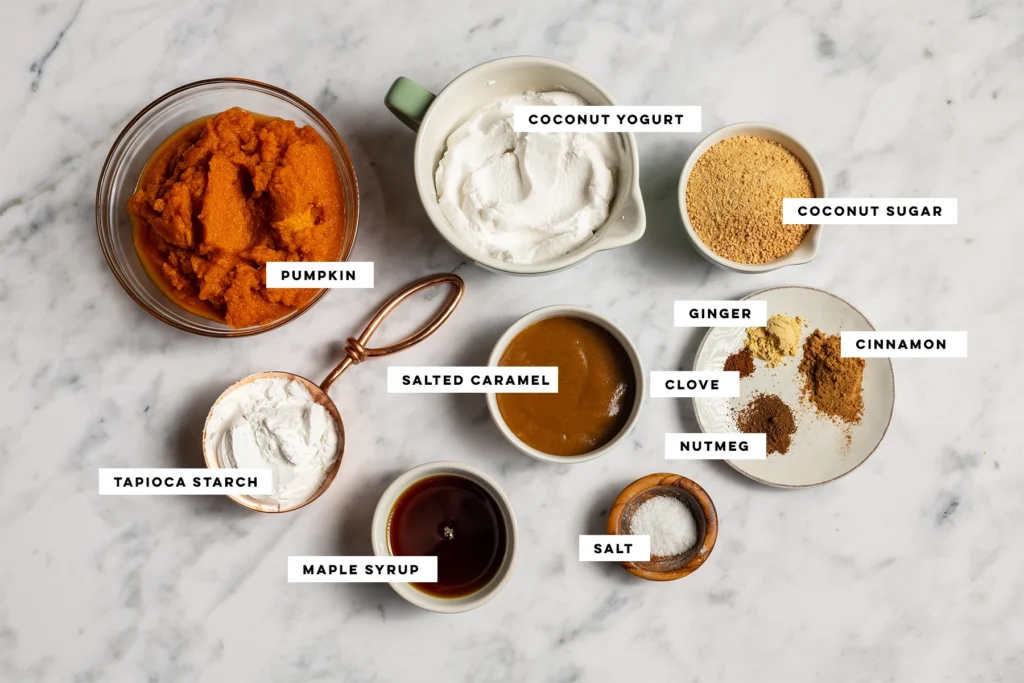
This baked pumpkin pudding is dairy-free, gluten-free and egg-free, and, depending on where coconut falls on your personal tolerance list, it can also work for a nut-free diet. It’s compliant with both AIP Core and Modified AIP and fits the Paleo protocol, using coconut sugar and pure maple syrup rather than refined sugar. Those added sugars do mean it is not Whole30 compliant. If you’re following AIP or Paleo, take a close look at the ingredient list on your coconut yogurt, as brands vary considerably and may contain thickeners, sweeteners or other additives that don’t fit your particular protocol. For AIP, opt for mace instead of nutmeg to avoid seed-spices.
Free subscriber gift
Exclusive recipes + a simple way to meal plan
Get five recipes I’ve never published on the site — from cozy winter squash soup to shrimp al pastor bowls — plus my easy one-page system for planning lunches + dinners all week.
Plus, I’ll send new recipes and the occasional update your way. Unsubscribe anytime.
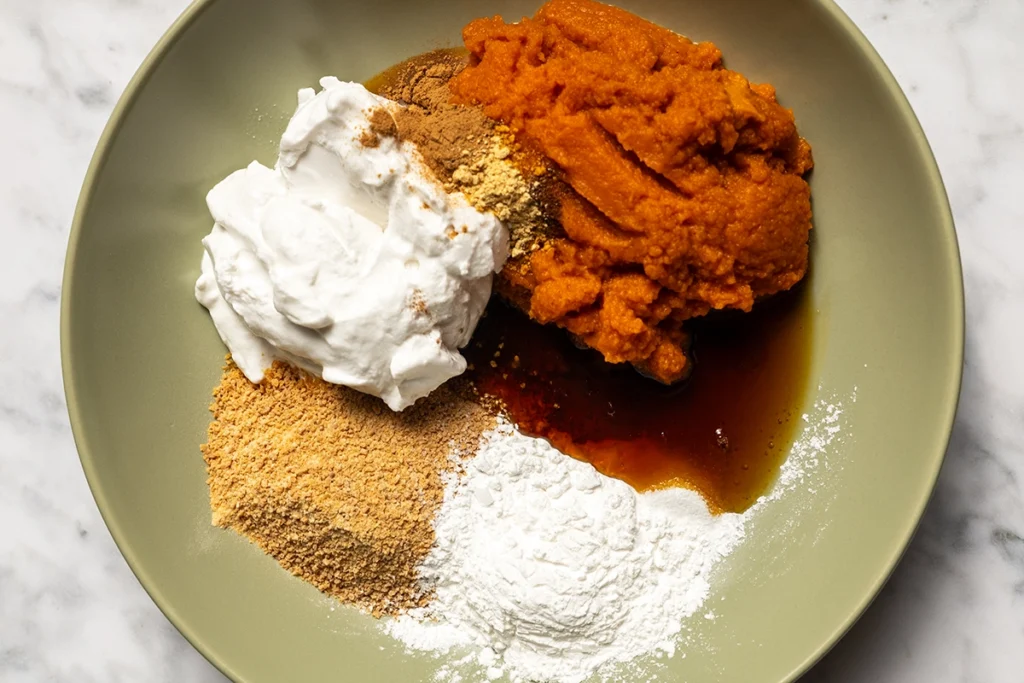
Whisk together the tapioca starch, coconut sugar, cinnamon, ginger, mace (or nutmeg), clove and salt. Tapioca starch is the egg replacer in this recipe and will help the pudding set.
A Note About Coconut Yogurt
Many popular coconut yogurts contain thickeners that do more than give the yogurt its creamy texture — they also help this pudding set into an egg-like custard. Cocojune, which I used exclusively while developing this recipe, contains cassava, while the Culina brand uses agar. Those ingredients supplement the tapioca starch added to the pudding and contribute to its final structure.
For that reason, the exact thickening power of the recipe may vary slightly depending on the coconut yogurt you use. The good news is that I tested this pudding with a wide range of tapioca starch ratios and found the formula surprisingly forgiving. There’s a comfortable range in which the custard will set while remaining creamy and scoopable, so small differences between yogurt brands shouldn’t make or break the recipe.
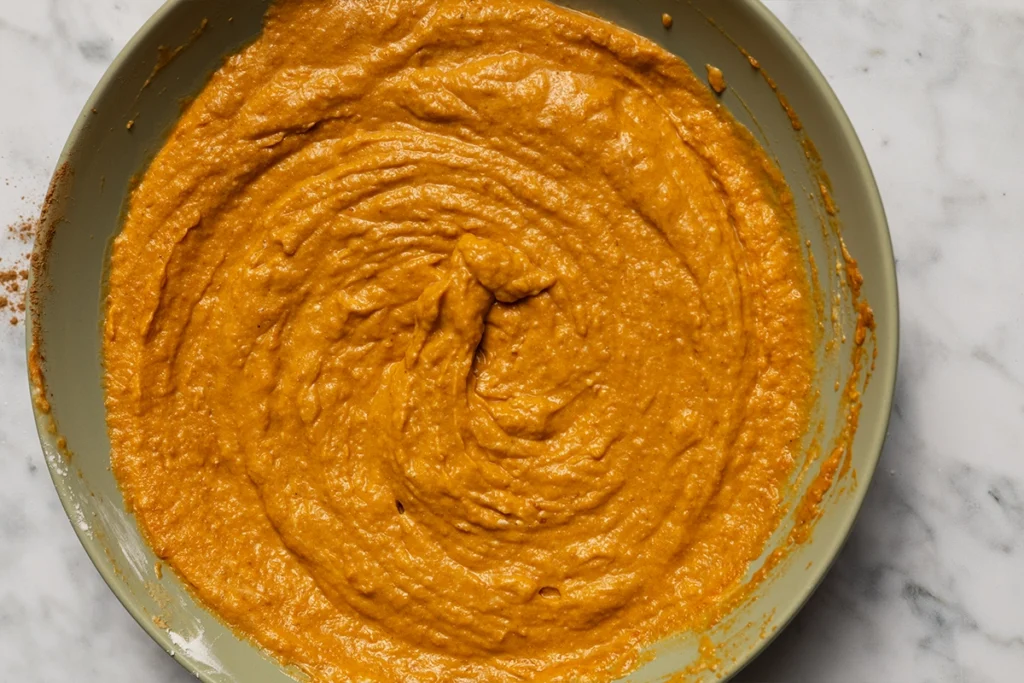
Add pumpkin puree (not pumpkin pie filling), coconut yogurt and maple syrup. Both sweeteners play a part in this recipe. Maple adds some additional moisture and a distinctly autumn flavor, while coconut sugar brings the sweetness to dessert level with caramel and molasses notes without adding more liquid.
Whisk until the wet and dry ingredients are mostly incorporated, then switch to a flexible spatula and fold the mixture together, scraping along the bottom of the bowl to pick up any coconut sugar or maple syrup that has settled there.
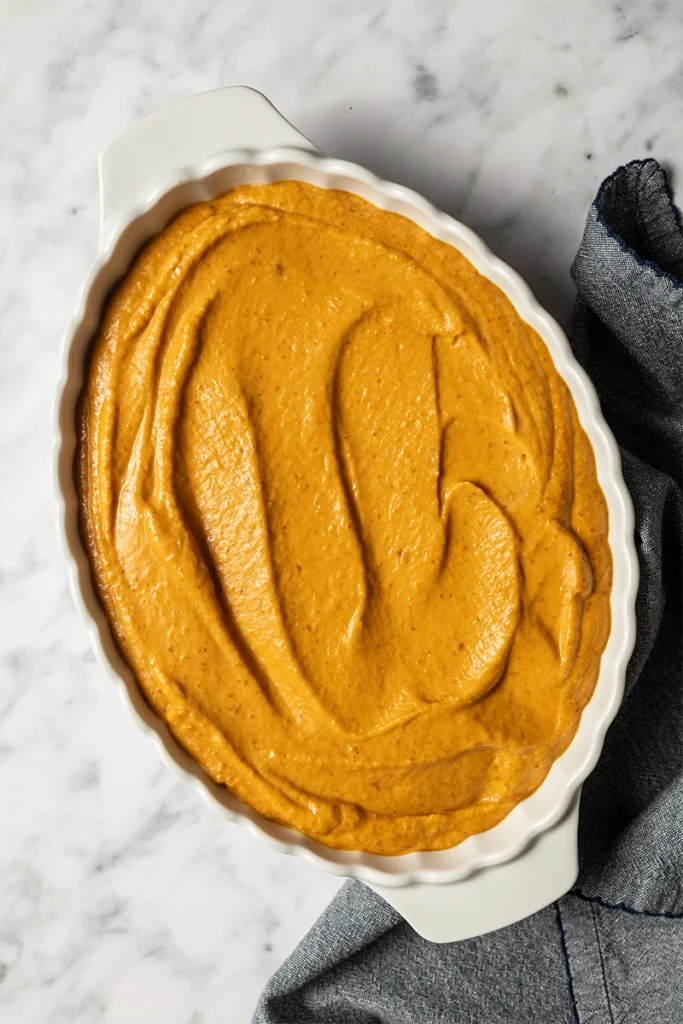
Continue folding until the batter is completely combined, then pour it into a ceramic pie plate or baking dish. I use a 1½-quart baking dish. Avoid a loaf pan or anything that adds a lot of depth to the pudding, which will affect how long the center takes to bake and set. If you’d rather make individual puddings, see the FAQ below for the mini version and adjusted baking times.
Start the pudding at 425°F for 15 minutes, then reduce the oven temperature to 350°F and bake for another 40 to 50 minutes.
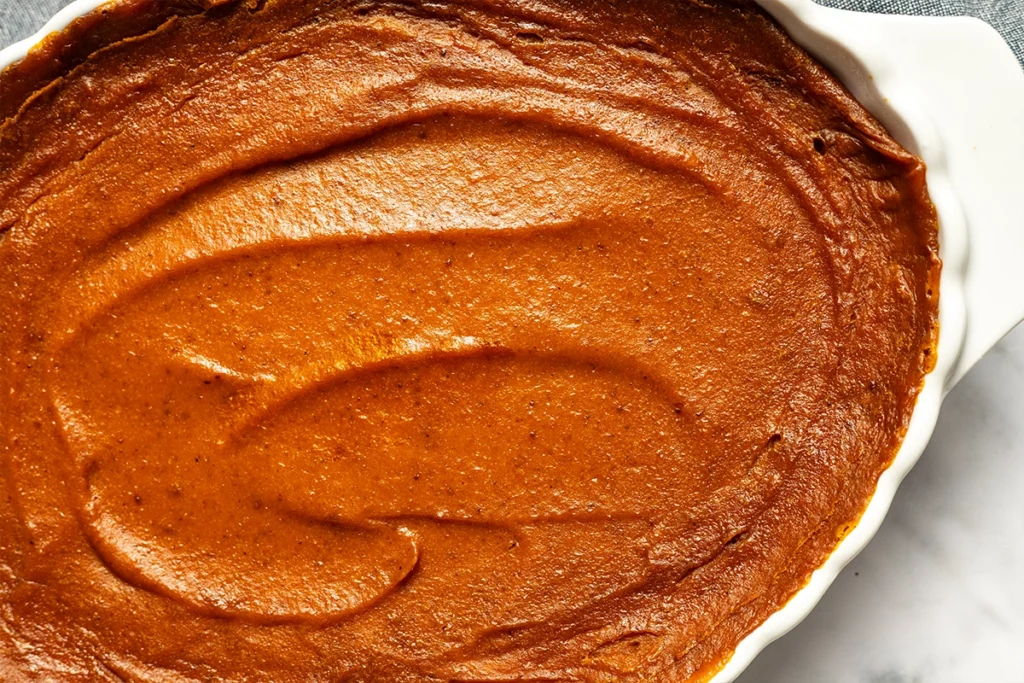
This is where you’ll want to keep a watchful eye and have an instant-read thermometer you trust. About halfway through baking, you’ll notice the edges begin to set and bubble and the top begin to brown, while the center may still feel quite soft.
When using tapioca starch to set a pudding, internal temperature is your best indication that it has cooked enough to set properly as it cools, even if the center still looks a little wobbly. Begin checking the temperature every 10 minutes or so, inserting the thermometer into the true center of the pudding — both across the dish and halfway through its depth. When it reaches 170°F, it’s ready.
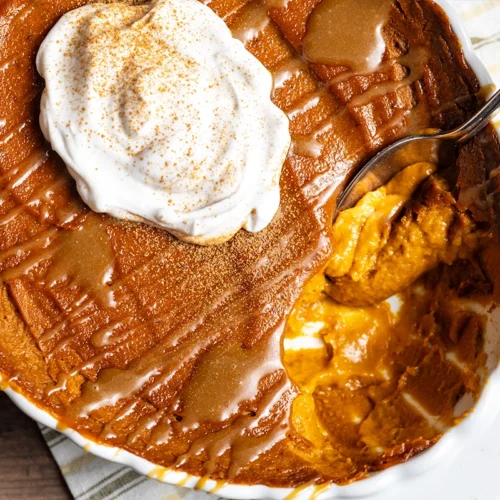
Remove the pudding from the oven while the center still has a gentle wobble. Cool on a wire rack for about 45 minutes, then transfer to the refrigerator, uncovered or very loosely covered to prevent condensation, and chill completely.
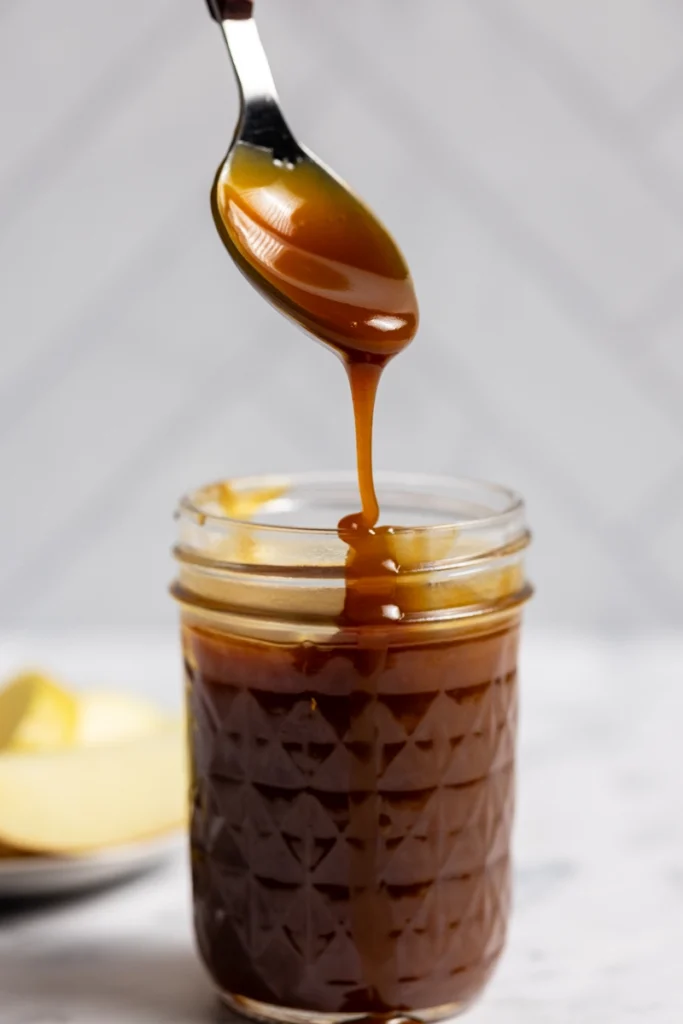
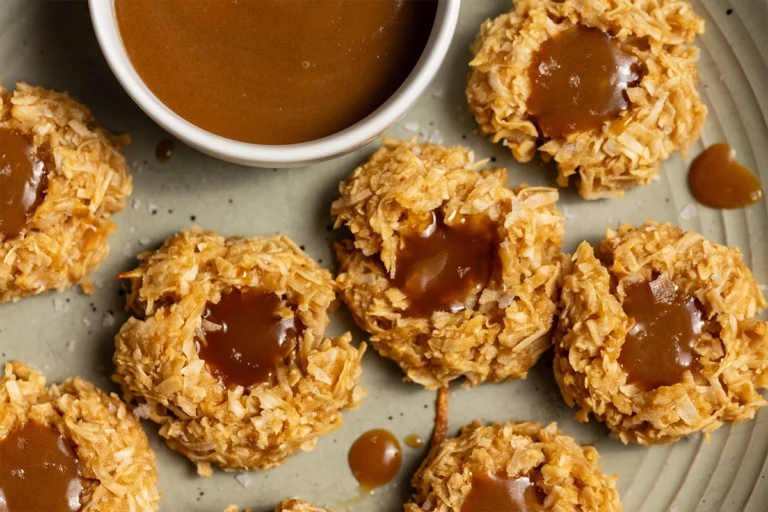
And then there’s the salted caramel. This baked pumpkin pudding is intentionally just sweet enough on its own, because a generous drizzle of my dairy-free salted caramel takes it the rest of the way. It’s made with coconut cream and coconut sugar, comes together in about 10 minutes, and adds a salty-sweet caramel finish that feels right at home with all those warm pumpkin spices.
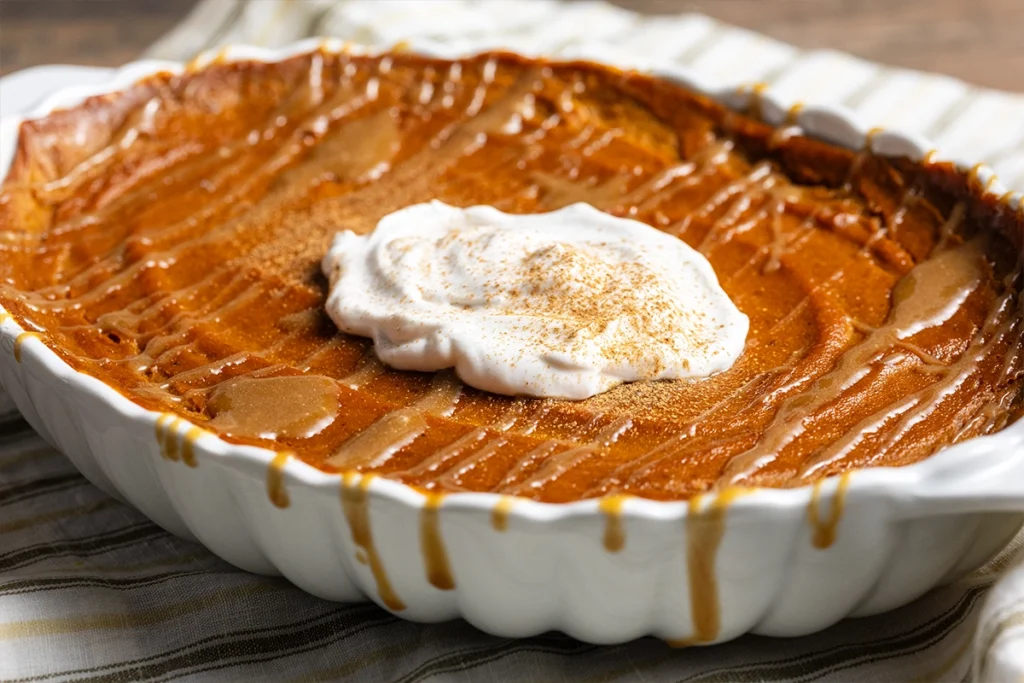
To serve, drizzle dairy-free salted caramel sauce over the top, and optionally a scoop of coconut yogurt sweetened with maple syrup. You can even dust with a little extra cinnamon. Then, scoop the pudding into individual dessert bowls or cups, with the caramel on the side. And at last, pumpkin has returned to Thanksgiving. Plus, the added caramel makes it even more decadent and luxurious — everything a holiday dessert should be.
You might also like
If you’re cooking for family and friends who eat a little differently, you’re in the right place. The Thanksgiving Collection has everything you need, from the appetizer table to the turkey, stunning seasonal sides and dessert.
Save this Recipe
Enter your email below and I’ll send it right to your inbox.
By saving this recipe, you will also receive regular email updates from Salt & Well.
Baked Pumpkin Pudding FAQ
Baked Pumpkin Pudding (Dairy-Free, Gluten-Free, Egg-Free)
Ingredients
For the pudding
- 5 tbsp tapioca starch
- 1 cup coconut sugar
- 1½ tsp cinnamon
- ¾ tsp ginger
- ¼ tsp mace or nutmeg
- ⅛ tsp clove
- 1 tsp kosher salt
- 2 (15 oz) cans pumpkin puree
- 3 cups unsweetened, plain coconut yogurt
- ½ cup maple syrup
For serving
- Salted caramel
- Coconut yogurt sweetened with maple syrup, optional
- Ground cinnamon, optional
Instructions
- Heat the oven to 425°F.
- In a large bowl, whisk together the tapioca starch, coconut sugar, cinnamon, ginger, nutmeg, clove and salt until evenly combined. Add the pumpkin puree, coconut yogurt and maple syrup and whisk until smooth.
- Pour the mixture into an 10-inch pie plate or a 1½-quart capacity baking dish. Bake for 15 minutes, then reduce the oven temperature to 350°F and continue baking for 40 to 50 minutes.
- Begin checking the pudding after 40 minutes. The edges should be set and the center soft but no longer liquid, holding its shape with a gentle wobble. Insert an instant-read thermometer into the center of the pudding, with the tip positioned halfway between the surface and bottom of the dish. Remove the pudding when it reaches about 170° to avoid overbaking, which can give the pudding a gummy texture.
- Cool at room temperature for 30 to 45 minutes, then refrigerate uncovered or loosely covered until completely chilled. Once cold, cover and keep refrigerated.
- To serve, drizzle the pudding with salted caramel and scoop into dessert dishes, serving additional caramel alongside. If desired, finish with maple-sweetened coconut yogurt and a dusting of cinnamon.
Notes
Did you make this recipe?
I would love to hear from you! Leave a comment or a rating below.
What’s Thanksgiving without pumpkin pie?